
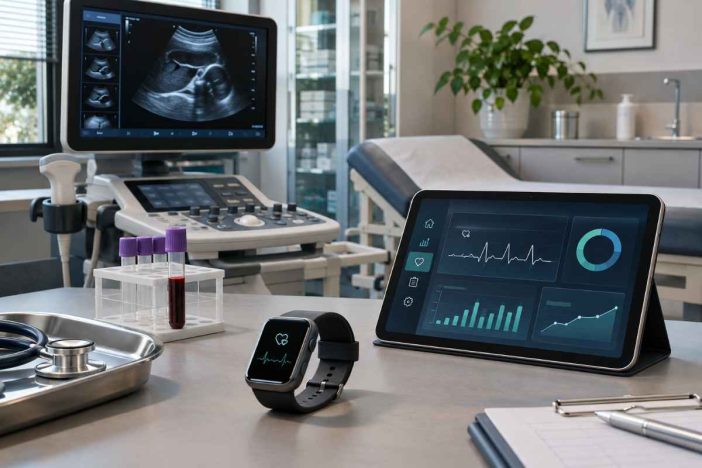
A smartwatch can flag an unusual heart rhythm before its owner notices anything wrong. A routine blood test can return an unexpected result even when someone feels perfectly healthy. Meanwhile, a healthcare provider may recommend a screening test, an imaging scan, or genetic counseling that raises an entirely different question: Will knowing more actually improve what happens next?
That is where medical innovation becomes both promising and complicated.
Modern healthcare offers increasingly sophisticated ways to detect disease, monitor physiological changes, interpret medical information, and deliver treatment. Yet a newer device is not automatically more accurate, an earlier diagnosis does not always improve outcomes, and collecting additional health data does not necessarily lead to better care.
Medical diagnostics and preventive health technology are most valuable when they answer a meaningful health question and lead to an appropriate decision.
This guide from Market Health Beauty brings together medical tests, preventive screening, wearable devices, digital health tools, artificial intelligence, and emerging medical technologies. Its purpose is to help readers understand what these technologies do, where the evidence is strongest, and what to check before relying on a result or purchasing a device.
Medical Diagnostics and Preventive Health Technology: What Belongs in This Field?
Medical diagnostics refers to tests and procedures used to investigate symptoms, identify medical conditions, assess health risks, or monitor known diseases.
Preventive health technology includes tools and systems that support appropriate screening, risk assessment, health monitoring, communication, and preventive care.
Medical innovation extends the field further, introducing new approaches to imaging, data analysis, implants, treatment planning, and medical interventions.
These activities overlap, but they are not interchangeable.
A clinician investigating persistent symptoms is asking a different question from someone undergoing routine cancer screening. A smartwatch displaying daily activity patterns serves a different purpose from a regulated medical device intended to detect a specific heart rhythm abnormality.
Understanding these distinctions is essential.
Screening, diagnosis, monitoring, and treatment
Screening looks for signs of a condition in people who may not have symptoms. The usefulness of screening depends on factors such as age, personal risk, test performance, and whether effective follow-up care is available.
Diagnostic testing investigates a suspected condition or an abnormal screening result. Its purpose is to provide information that helps establish or rule out a diagnosis.
Monitoring follows changes in health over time. This may involve laboratory measurements, prescribed medical devices, home blood pressure readings, or selected wearable technology.
Treatment technology supports medical intervention, rehabilitation, or disease management. Examples include certain implants, therapeutic devices, and specialized medical systems.
These distinctions also explain why preventive testing should be selective rather than unlimited.
For a closer examination of screening and long-term risk awareness, read Preventive Diagnostics Explained: How Early Detection Supports Healthy Aging.
Start With the Health Question, Not the Device
The first question should rarely be, “Which new technology should I buy?”
A more useful starting point is to identify the decision that needs to be made.
Someone who wants to understand an unfamiliar laboratory result needs a different information pathway from someone comparing health-tracking devices. A person preparing for recommended cancer screening has different needs from a patient whose doctor has ordered imaging to investigate symptoms.
Before choosing a test or device, identify the clinical question, the expected benefit, the limitations, and the action that could follow.
The decision guide below helps connect common situations with appropriate categories of medical technology.
| Your health question | Where to start | Important consideration |
|---|---|---|
| What does an unexpected lab result mean? | Laboratory result interpretation | Reference ranges and clinical context |
| Which preventive screening is appropriate? | Preventive diagnostics | Age, risk, evidence, and follow-up |
| Can a wearable monitor my health? | Wearable health devices | Measurement validation and intended use |
| When is medical imaging useful? | CT scan overview | Clinical indication, radiation, and alternatives |
| How can AI support healthcare? | AI in healthcare | Clinical validation and human oversight |
Educational navigation only. A healthcare professional should determine which tests or medical devices are appropriate for an individual’s circumstances.
Laboratory Tests and Biomarkers: Understanding the Numbers
Laboratory testing remains an essential part of modern diagnostics. Blood and urine tests can provide information about organ function, blood cells, metabolic health, and other clinical concerns.
However, an individual laboratory value rarely tells the entire story.
Blood tests and reference ranges
A complete blood count measures several components of blood, including red blood cells, white blood cells, hemoglobin, and platelets. Other laboratory tests may evaluate glucose, cholesterol, electrolytes, kidney function, or liver-related markers.
Results must be interpreted against the reporting laboratory’s reference ranges and the patient’s medical context.
A value outside the reference range does not always establish disease. Similarly, a result within the range does not guarantee that a person is healthy.
Readers who want to understand common report terminology can explore Reading Your Lab Test Results and our introduction to blood tests and their clinical purposes.
Urine tests and other diagnostic samples
Urinalysis can evaluate characteristics of urine and identify findings that may require additional investigation, including protein, blood, glucose, or evidence suggesting infection.
Different testing methods answer different questions. A dipstick result, microscopic examination, and urine culture do not provide identical information.
Our urine test guide introduces the functions and methods of urinalysis.
When evaluating any laboratory result, the important questions are:
- Why was this test ordered?
- What reference range and measurement units apply?
- Could medications, recent activity, preparation, or illness affect the result?
- Does the finding require repeat testing or another investigation?
- What decision would change because of this information?
A healthcare professional can place these findings in context rather than interpreting one number in isolation.
Preventive Screening: Finding Problems Without Creating Unnecessary Harm
Screening offers a meaningful advantage when identifying a condition earlier makes effective prevention or treatment more likely.
But not every disease has a reliable screening test, and not every screening approach benefits everyone.
In the United States, the U.S. Preventive Services Task Force evaluates preventive services according to the available evidence and their balance of benefits and harms.
Cancer screening and preparation
Established screening programs address selected cancers, including breast, cervical, colorectal, and lung cancer in eligible populations.
The appropriate test and screening interval depend on the individual and the applicable recommendations.
For readers preparing for a recommended procedure, see our colonoscopy preparation guide.
Our Pap smear guide also introduces a common cervical screening procedure.
Neither article replaces personalized instructions from a screening provider, particularly when preparation requirements or guidelines have changed.
Why more screening is not always better
Testing can sometimes produce false-positive findings, false-negative results, incidental abnormalities, unnecessary follow-up procedures, or overdiagnosis.
Overdiagnosis occurs when screening detects a condition that would not have caused symptoms or harm during a person’s lifetime, potentially exposing them to treatment without a corresponding benefit.
The objective is not to discover every possible abnormality. It is to identify health problems for which detection and appropriate follow-up are likely to improve outcomes.
That is why screening decisions should consider age, symptoms, risk factors, personal preferences, and established clinical recommendations.
Medical Imaging: Choosing the Appropriate Examination
Medical imaging allows healthcare professionals to examine structures inside the body without relying solely on symptoms and physical examination.
Different technologies offer different benefits and limitations.
CT scans
Computed tomography (CT) uses X-rays and computer processing to produce cross-sectional images. It can be useful for evaluating injuries, suspected disease, and other specific clinical problems.
Because CT uses ionizing radiation, its benefits should be weighed against the potential risks, especially when repeated scans or particular patient circumstances are involved.
Some CT examinations also require contrast materials, introducing additional considerations.
Our guide to CT scans, indications, and contraindications explains the examination and common reasons it may be requested.
Magnetic resonance imaging
Magnetic resonance imaging (MRI) uses a strong magnetic field and radiofrequency signals rather than ionizing radiation to produce detailed images.
MRI may be particularly useful for certain soft-tissue, neurological, joint, and other clinical examinations.
It is not automatically the preferred alternative to CT. The choice depends on the medical question, urgency, available equipment, safety considerations, and other factors.
Explore our magnetic resonance imaging overview for additional background.
An appropriate imaging examination is one that provides useful information for the specific clinical situation—not necessarily the most expensive or technologically complex scan.
Genetic Testing and Precision Medicine
Genetic testing can examine variations in DNA, chromosomes, or related biological material.
Depending on the test, the purpose may be to investigate a suspected inherited condition, assess carrier status, support certain treatment decisions, or evaluate specific hereditary risks.
However, genetic information is rarely a simple prediction of a person’s medical future.
A result indicating increased susceptibility does not mean that a disease will inevitably develop. A negative result may not eliminate risk, and a variant of uncertain significance may not provide a clear clinical answer.
Our guide to genetic testing and its different uses introduces the available testing categories.
Before undergoing testing, ask whether the results could change medical management, whether genetic counseling is appropriate, and what the findings may mean for family members.
The National Library of Medicine’s genetic test interpretation resource provides further information about positive, negative, and uncertain results.
Wearable Health Devices and Home Monitoring
Health monitoring has expanded beyond hospitals and clinics.
Smartwatches, activity trackers, portable monitors, connected medical sensors, and specialized wearable devices can collect physiological information in everyday environments.
Some devices support general wellness, while others have specific medical purposes.
This difference matters because their accuracy, validation requirements, and regulatory status may differ.
Which measurements deserve more confidence?
A wearable’s usefulness depends on the measurement being taken, the device’s intended purpose, the validation evidence, and the way results are interpreted.
Activity trends and exercise reminders may help support everyday habits without serving as diagnostic evidence.
By contrast, a device intended to identify a particular medical condition requires appropriate evidence for that specific function.
One important example is blood glucose monitoring. The FDA has warned against smartwatches and smart rings that claim to measure glucose independently without piercing the skin. Such claims should not be confused with wearable displays that receive readings from authorized glucose-monitoring systems.
Our article on wearable health devices explores the technology, its potential applications, and important limitations.
Blood pressure apps and measurement accuracy
Blood pressure tracking software can help organize readings, monitor trends, and prepare information for a medical consultation.
However, a smartphone application that records blood pressure readings should not be confused with a validated blood pressure measuring device.
Readers exploring software options can review our blood pressure apps for Android guide.
When monitoring a medical condition, use a measurement method appropriate for that purpose and review important findings with a qualified clinician.
Digital Health, Telehealth, and Connected Medical Records
A medical test becomes more useful when its findings reach the appropriate clinician and can be interpreted in the context of other health information.
Digital health systems can support appointment management, remote consultations, monitoring, patient education, and access to medical records.
Health applications and remote care
Health applications may offer reminders, logs, symptom tracking, or connections to healthcare services. Their benefits depend on usability, information quality, privacy protections, and whether they support appropriate clinical decisions.
Our digital health apps and tools guide examines several applications and practical evaluation considerations.
Telehealth can extend access to selected healthcare services, although some conditions still require physical examination, diagnostic testing, or urgent in-person care.
Learn more in our introduction to telehealth benefits.
Health data interoperability
Interoperability means that different healthcare information systems can exchange and use relevant information.
Standards such as HL7 Fast Healthcare Interoperability Resources (FHIR) provide a technical foundation for sharing structured health information between compatible systems.
For additional background, see What Is Fast Healthcare Interoperability Resources (FHIR)?.
Patients should also consider where their health information is stored, who can access it, whether it can be exported, and what protections apply.
Not every consumer health application is subject to the same privacy requirements as a healthcare provider.
Artificial Intelligence and Emerging Medical Innovation
Artificial intelligence is increasingly being incorporated into medical devices and healthcare software.
Potential applications include assisting with image interpretation, identifying patterns in clinical data, supporting workflow efficiency, and providing decision support within defined clinical settings.
The essential distinction is between a system that makes an appealing technological claim and one that has been appropriately evaluated for its intended clinical use.
AI-assisted diagnostics
Some AI-enabled medical devices have completed an FDA marketing authorization pathway. However, authorization for a specific function does not mean that every possible application of the technology has been validated.
A system’s accuracy may depend on its intended population, clinical setting, input data, and limitations.
Our artificial intelligence in healthcare overview introduces the wider field.
Readers can also consult the FDA’s AI-enabled medical devices resource to learn how authorized medical technologies are evaluated.
Medical devices, implants, and advanced treatment
Innovation also changes what happens after diagnosis.
Medical implants, image-guided interventions, specialized manufacturing, and emerging materials can support treatment rather than screening.
Our existing guides introduce 3D printing in medicine, nanotechnology in medicine, and the clinical role of stents.
These subjects should be evaluated individually. A technology used in established clinical practice is not equivalent to an experimental approach still undergoing investigation.
How to Evaluate a Medical Device or Health Technology
A device’s marketing language can make it difficult to distinguish convenience from medical evidence.
Before purchasing or relying on a health technology product, consider six questions.
1. What is its intended use?
Does the product provide general wellness information, measure a physiological parameter, screen for a defined condition, or support diagnosis or treatment?
A product may be appropriate for one task and unsuitable for another.
2. Has its performance been independently evaluated?
Look for studies involving the relevant patient population and the intended use.
Accuracy claims should ideally explain what the device was compared against, under what conditions it was tested, and what limitations were observed.
3. What does its regulatory status actually mean?
Terms such as FDA registered, FDA cleared, and FDA approved are not interchangeable.
Registration of a manufacturer or listing of a device does not establish that the FDA has approved or cleared that product.
The FDA’s explanation of device registration and marketing authorization helps consumers distinguish these claims.
4. What happens if the result is wrong?
Consider both false reassurance and unnecessary alarm.
For a medical-purpose device, the consequences of inaccurate measurements may be substantially more serious than those of an ordinary fitness tracker.
5. Can the information be used appropriately?
Can the results be interpreted, exported, and shared with a qualified healthcare professional?
Data collection is not a substitute for an established clinical follow-up process.
6. What is the full cost?
Consider the purchase price, required subscriptions, consumables, replacement sensors, clinical interpretation fees, and ongoing maintenance.
A lower initial price may not mean a lower total cost.
Most importantly, the product should address a genuine need rather than create a new expense without meaningful benefit.
Questions to Ask Before Paying for a Medical Test
Healthcare costs depend on the test, provider, insurance arrangements, and circumstances of care.
Before scheduling a non-emergency diagnostic test, patients in the United States may find it useful to ask:
- Why is the test recommended for my situation?
- Is it a screening test or a diagnostic investigation?
- Are there reasonable alternatives, including a less invasive option?
- Will my insurance cover this test for the stated indication?
- Is the facility and interpreting clinician in-network?
- Are laboratory, imaging interpretation, or follow-up charges billed separately?
- What happens if the result is abnormal, uncertain, or incomplete?
For patients paying out of pocket, requesting a written cost estimate and asking about separately billed services can clarify the financial commitment.
Insurance coverage and cost estimates should always be verified with the relevant provider and insurer.
What to Do When a Test or Device Reports an Abnormal Result
An unexpected health result deserves appropriate attention, but not every flagged value is an emergency.
The response should depend on symptoms, the measurement, its reliability, and any instructions provided by the treating clinician.
- Check the source. Identify whether the information came from a laboratory, a validated medical device, or a general wellness application.
- Review the context. Look at reference ranges, collection conditions, measurement units, and any relevant symptoms.
- Follow the supplied instructions. A report may recommend contacting a healthcare professional or arranging additional evaluation.
- Avoid changing treatment independently. Do not start, stop, or adjust prescribed medication solely because of an app notification or an isolated reading.
- Seek appropriate follow-up. A clinician may recommend confirmation, repeat measurement, additional testing, or no further investigation depending on the circumstances.
Severe chest pain, major breathing difficulty, stroke-like symptoms, or other signs of a medical emergency require immediate medical assessment rather than continued device monitoring.
The purpose of medical technology is to support timely, appropriate care—not to create an endless cycle of self-testing.
Frequently Asked Questions
What is preventive health technology?
Preventive health technology includes tools that support appropriate screening, health monitoring, risk assessment, communication, and preventive care. Examples may include selected screening tests, validated home monitoring devices, and digital systems that help patients and clinicians manage relevant information.
Are medical diagnostics and preventive screening the same?
No. Screening generally evaluates people without symptoms for selected health conditions. Diagnostic testing investigates suspected disease, symptoms, or abnormal screening findings. The distinction affects which tests are appropriate and how results should be interpreted.
Can wearable devices diagnose medical conditions?
Certain wearable devices have specifically authorized medical functions, but many consumer products provide general wellness information. A feature’s clinical usefulness depends on its intended use, validation, and regulatory status. A general fitness reading should not automatically be treated as a diagnosis.
Are more medical tests always better for preventive health?
No. Additional testing can sometimes lead to unnecessary procedures, misleading results, or avoidable costs. Screening decisions should be based on established evidence, individual risk, and whether acting on the result is likely to improve health outcomes.
How can I verify whether a medical device is FDA cleared or approved?
Start with the manufacturer’s exact device name, model, and claimed intended use. Consult the relevant FDA medical device database rather than relying only on promotional badges or claims of FDA registration.
Will artificial intelligence replace doctors in medical diagnosis?
AI can assist certain clinical tasks, but its suitability depends on validation, intended use, and integration into appropriate care. It should not be assumed to provide reliable independent diagnosis simply because a product uses artificial intelligence.
Explore Medical Diagnostics and Health Technology by Topic
Market Health Beauty organizes this area into several related fields so readers can move from an initial question to a more specific guide.
Diagnostic foundations: Laboratory tests, biomarkers, screening procedures, and medical imaging help explain how clinical information is obtained.
Preventive health and monitoring: Risk-aware screening, wearable monitoring, and selected home devices support appropriate follow-up and ongoing care.
Digital healthcare: Medical applications, telehealth, artificial intelligence, and health data interoperability connect technology with clinical workflows.
Genetics and precision health: Genetic tests and related technologies introduce opportunities for more individualized information while requiring careful interpretation.
Medical innovation and intervention: Advanced materials, specialized devices, implants, and developing medical technologies illustrate how innovation extends beyond diagnosis into treatment.
You can also browse the Medical Innovation, Diagnostics & Preventive Health Technology category archive for additional published articles.
The Bottom Line: Better Health Decisions, Not Just More Technology
Medical innovation can offer meaningful advances in how health information is collected, interpreted, and used. But its value depends on a practical relationship between evidence and action.
A well-chosen screening test may support timely intervention. A reliable monitoring device may help a patient and clinician follow a known condition. A useful digital system may make important health information easier to share.
None of those benefits follows automatically from the novelty of the technology.
The most important question remains: Will this test, device, or system help make a safer, better-informed health decision?
That principle should guide the use of medical diagnostics and preventive health technology—today and as new approaches emerge.
Evidence and Further Reading
The following authoritative resources support the central principles in this guide:
- U.S. Preventive Services Task Force — A and B Recommendations
- CDC — Cancer Screening Tests
- MedlinePlus — How to Understand Your Lab Results
- FDA — Medical Device Approval, Clearance, and Registration
- FDA — Sensor-Based Digital Health Devices
- MedlinePlus Genetics — Understanding Genetic Test Results
- HealthIT.gov — HIPAA for Consumers
Editorial note: This guide provides general educational information, not individualized medical advice. Screening recommendations, device authorizations, and clinical guidance can change. Decisions about testing, diagnosis, or treatment should be made with an appropriately qualified healthcare professional.
Explore All Articles in This Category
- Preventive Diagnostics Explained: How Early Detection Supports Healthy Aging
- Nanotechnology in Medicine: 7 Mind-Blowing Power Breakthroughs
- 3D Printing in Medicine: 10 Revolutionary Breakthroughs Saving Lives Today
- Wearable Health Devices: 7 Shocking Breakthroughs
- Digital Health Apps and Tools: 7 Incredible Ways to Thrive
- Artificial Intelligence in Healthcare: 9 Incredible Benefits
- What is Fast Healthcare Interoperability Resources (FHIR)?
- Artificial Intelligence: Definition, Philosophy, Forms, and How It Works
- Cardiac Catheterization: Definition, History, 8 Indications, Risks, and Preparation
- Neurogenic Bladder: Definition, Causes, 5 Risk Factors, Symptoms, Diagnostic Tests, Prevention, and Treatment
- What is A CT Scan: Definition, 7 Indications, Contraindications, Costs, Why and Who Needs It
- Pap Smear: Definition, Cost, 5 Indications, Preparation, and Stages
- Face Transplant: Definition, Reasons, 3 Procedures, and The First Face Transplant in The World
- Stem Cell Definition, 12 Types, and General Properties
- Cornea Transplant Surgery: Definition, 2 Types, Indication, Purposes, and Preparation
- 16 Risk of Blood Transfusion
- Bariatric Surgery: Definition, 4 Types, and Requirements
- Endometrial Biopsy: Definition, Why, and Who Should Undergo It and Expected Results
- 5 HBOT Therapy Indications, Risks, and Side Effects
- 5 Tests For Ovarian Cancer Diagnosis
- Radiation Therapy: Definition, 2 Types, Indication, and Side Effects
- Genetic Engineering: Benefits, How It Works, 3 Examples, Facts, and Positive & Negative Impacts
- Heart Transplants: Definition, 3 Procedures, and Risks
- What Is Genetic Testing: Definition, 7 Types, and Benefits
- Alzheimer’s Blood Test, Brain Damage, and Important Key
- Blood Type Test: Why (3 Functions), How, and Procedures
- Blood Test: Why, When, 9 Types, and Complete Blood Test Procedure
- Organ Transplantation: Definition, History, 8 Benefits, and Risk
- 9 Benefits of Telehealth For Patients, Doctor, and Hospitals
- Magnetic Resonance Imaging: History, Reasons, and Side Effects