Why Vascular Health Is Central to Brain Longevity
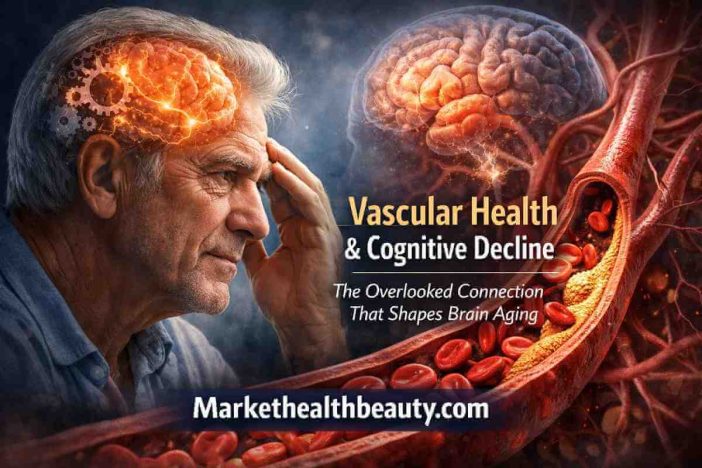
Vascular health and cognitive decline are inseparable in long-term aging science. The brain represents only about 2% of body weight, yet it consumes roughly 20% of the body’s oxygen and energy supply. That demand is met through an intricate vascular network that must remain flexible, responsive, and unobstructed.
When blood vessels stiffen, narrow, or lose regulatory precision, cognitive performance is often the first system to show strain.
This relationship sits at the core of Brain Health, Cognitive Longevity & Neuroprotection, where independence depends on sustained neural support—not just neuronal survival.
The Brain Is a Vascular Organ as Much as a Neural One
It is tempting to think of cognitive decline as a purely neuronal issue. Yet neurons cannot function without:
- Stable oxygen delivery
- Efficient glucose transport
- Healthy microvascular signaling
- Intact blood–brain barrier integrity
Compromised circulation does not usually cause sudden collapse. Instead, it produces subtle inefficiencies—slower processing speed, reduced cognitive flexibility, diminished executive function.
Over time, these small inefficiencies compound.
This compounding dynamic mirrors the long-term thinking framework described in Anti-Aging, Longevity & Healthy Aging, where systemic strain accumulates before symptoms emerge.
How Vascular Changes Accelerate Cognitive Decline
Several vascular shifts commonly occur with aging:
1) Arterial Stiffness
Reduced elasticity impairs cerebral perfusion, particularly during cognitive stress.
2) Microvascular Damage
Small vessel deterioration limits nutrient exchange at the capillary level.
3) Impaired Blood–Brain Barrier
Barrier disruption increases neural vulnerability to inflammatory signaling.
4) Reduced Cerebral Blood Flow Regulation
The brain becomes less adaptable to changes in metabolic demand.
Individually, each shift appears modest. Together, they reshape cognitive resilience.
The Compounding Effect: Risk Accumulation in the Vascular System
Vascular deterioration rarely happens in isolation. It interacts with:
- Metabolic dysregulation
- Chronic inflammation
- Persistent stress
- Sedentary patterns
This interaction reflects the compounding principle outlined in Risk Accumulation Explained. Small vascular insults, repeated over decades, create structural constraints that reduce cognitive margin.
Cognitive decline, in this context, is not mysterious—it is structural.
Inflammation as a Bridge Between Vascular and Cognitive Aging
Low-grade inflammation plays a dual role:
- It accelerates vascular stiffening.
- It increases neural vulnerability.
This link explains why Inflammaging Explained is essential to understanding vascular-brain interaction. Inflammation magnifies both vascular strain and neural stress, tightening the feedback loop between circulation and cognition.
Neuroprotection cannot succeed without vascular protection.
Midlife as the Critical Window for Vascular Intervention
By midlife, subtle vascular changes often begin influencing cognition—long before diagnosis.
Research consistently shows that:
- Midlife blood pressure patterns predict later cognitive outcomes.
- Vascular risk factors in midlife correlate with cognitive impairment decades later.
This timing reinforces the importance of early design principles emphasized in Longevity Risk Management. Waiting for symptoms is strategically unsound.
Neuroprotection Depends on Vascular Integrity
A Neuroprotection Strategy that ignores vascular health is incomplete.
Neuroprotection requires:
- Adequate cerebral perfusion
- Stable metabolic delivery
- Reduced vascular strain
- Balanced inflammatory signaling
When circulation falters, neural systems operate under constraint. Protecting vessels protects neurons indirectly but powerfully.
Expert Insight: Cognitive Decline Often Begins in the Vascular System
From longitudinal cognitive aging analyses, a recurring pattern emerges:
Vascular inefficiency frequently precedes measurable cognitive impairment.
This does not imply inevitability. It suggests opportunity. When vascular signals are recognized early, trajectory adjustments remain possible.
Trend-based monitoring—central to Preventive Diagnostics Explained—becomes critical in this phase.
Practical Perspective: Structural, Not Cosmetic Prevention
Effective vascular-brain preservation focuses on structural factors:
- Maintaining vascular elasticity
- Supporting endothelial function
- Reducing chronic strain
- Preserving metabolic flexibility
It avoids superficial “brain hacks” and instead strengthens the infrastructure that cognition depends on.
Why This Connection Is Often Overlooked
Several factors contribute to the oversight:
- Cognitive decline is framed neurologically, not vascularly.
- Vascular changes are gradual and asymptomatic.
- The brain’s vascular network is invisible without advanced imaging.
Yet the evidence linking vascular health and cognitive decline continues to strengthen across aging research frameworks, including work summarized by the National Institute on Aging and global aging models discussed by the World Health Organization.
FAQ: People Also Ask
How does vascular health affect cognitive decline?
Vascular health influences cerebral blood flow, oxygen delivery, and nutrient transport—essential for maintaining cognitive performance over time.
Can poor circulation cause memory problems?
Chronic reductions in cerebral perfusion are associated with slower processing and executive decline.
Is vascular cognitive impairment preventable?
While outcomes vary, early vascular risk management improves long-term cognitive resilience.
Why is midlife important for vascular brain health?
Midlife vascular patterns strongly influence later-life cognitive outcomes.
Bottom Line
Vascular health and cognitive decline are deeply intertwined. The brain cannot sustain independence without stable circulation, elastic vessels, and resilient microvascular networks.
Cognitive aging is rarely a sudden collapse. It is often a vascular story unfolding quietly over decades. By recognizing and managing vascular risk early, long-term cognitive independence becomes a design objective—not a fragile hope.