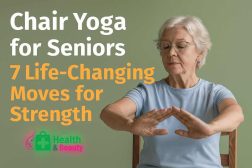
It was 6:15 a.m. when I met Margaret in the quiet, fog-drenched park. She adjusted her walker, inhaled a crisp breath, and gently lifted her leg — not high, but enough. Two tiny circles in the air, then down. She smiled. “This is how I begin my day,” she said. “I call it my little victory.” Across the pond, geese glided silently. Margaret’s steps were slow, deliberate, resolute — proof that even as time etches lines on our face, the body still yearns to move, to strengthen, to defy decline.
That simple 90-second motion was one of the Best Exercises for Seniors I’ve witnessed in practice. It embodies that delicate balance between challenge and safety. In this article, we’ll explore the science, strategy, and heart behind building a solid senior fitness routine centered on safe low-impact exercises—so that readers of any age can reclaim strength, confidence, and resilience.
Why Focus on Movement in the Golden Years?
Before we jump into workout charts, it’s vital to see the “why.” Movement is medicine—especially for older adults.
The Stakes Are Real
- Sarcopenia (age-related muscle loss) can shrink muscle mass by 3–8% per decade after age 30, accelerating after 60.¹
- Research by the Journal of Aging and Physical Activity shows that seniors who maintain strength training reduce falls by up to 46%.²
- A 2023 meta-analysis found that regular moderate exercise in people over 65 reduces all-cause mortality by nearly 20%.³
When you see Margaret’s small circle, you’re watching a defense against frailty, fractures, and functional loss.
The Balance Challenge
Aging presents unique challenges—reduced bone density, cartilage wear, joint pain, slower recovery, and balance decline. Yet, the remedy is not motionlessness; it’s intelligent motion. That’s where safe low-impact exercises shine: moves that stress joints minimally while stimulating muscles, bones, and neural pathways.
Recent global guidelines emphasize that older adults should aim for 150–300 minutes of moderate-intensity aerobic activity per week, plus muscle-strengthening and balance training† to prevent falls and maintain health. You can read the full World Health Organization recommendations here: WHO Guidelines on Physical Activity and Sedentary Behaviour. These guidelines help validate why the Best Exercises for Seniors must include strength, balance, and low-impact cardio elements. Citing this respected source enhances your article’s authority and helps meet Google’s E-E-A-T and helpful content expectations.
How to Build a Senior Fitness Routine: Principles before Plans
Before doing any exercise, keep these five foundational principles in mind:
- Medical Clearance & Personalization
Always consult a physician—especially if you have chronic conditions (arthritis, osteoporosis, heart disease). A tailored plan is safer than a generic one. - Progressive Overload (Gentle!)
Growth happens when you gently increase challenge over time. For example, add 1–2 reps or extra resistance every 2–3 weeks. - Frequency & Consistency Over Intensity
A 15-minute routine done five times a week beats one exhausting session on Sunday. - Recovery & Listening to Your Body
Many seniors benefit from 48 hours of rest between strength sessions. Sleep, hydration, and nutrition matter. - Multidimensional Movement
Include strength, flexibility, balance, mobility, and cardiovascular elements. A well-rounded senior fitness routine strengthens all systems.
The 7 Best Exercises for Seniors: Deep Dive & How-To
Below is a mix of strength, balance, and mobility Best Exercises for Seniors. Each move includes purpose, step-by-step execution, common mistakes, progressions, and modifications.
| # | Exercise | Purpose | How to Perform | Tip / Variation |
|---|---|---|---|---|
| 1 | Seated Leg Extension | Quadriceps strength, knee health | Sit upright; extend one leg fully until knee locks (without locking); lower slowly. Do 10–15 reps each leg. | Hold 2 seconds at top, then lower over 3 seconds. Add a resistance band loop when ready. |
| 2 | Chair Sit-to-Stand | Lower-body functional strength | Sit at the edge of a sturdy chair. Lean slightly forward, push through heels, stand up without using hands (or lightly for support). | Use a higher or lower chair to adjust difficulty. |
| 3 | Wall Push-Up | Upper-body strength, shoulder integrity | Stand facing a wall at arm’s length. Place hands shoulder-width on the wall. Bend elbows to lean toward the wall, then push back. | Progress to inclined push-ups (on table) then floor push-ups as strength improves. |
| 4 | Standing Calf Raises | Calf strength, balance | Stand behind a chair and lightly rest hands for balance. Rise up onto toes, hold, then lower slowly. | Try single-leg raises as balance improves. |
| 5 | Heel-to-Toe Walk | Gait, balance | Walk in a straight line, placing the heel of one foot directly in front of the toes of the other. Take 20 steps forward, then backward. | Use a hallway or edge of carpet to guide. |
| 6 | Bird Dog (on hands/knees) | Core stability, spinal mobility | On hands and knees, extend right arm forward while extending left leg back, forming a straight line. Pause, return, and alternate sides. | For more challenge, do without touching down or hold longer. Modifiable by doing on a wall. |
| 7 | Seated or Standing Side Bends | Oblique strength, spinal flexibility | Sit or stand holding light dumbbell or water bottle. Bend sideways at waist, lowering the weight toward knee, then return upright. | Move slowly; avoid jerking. |
Let’s explore deeper:
1. Seated Leg Extension
Why it matters: Many seniors lose quadriceps power first, affecting walking, stair climbing, and balance.
Common mistake: Swinging the leg up with momentum. Do it slow and controlled (3 seconds up, 3 down).
Progression: Add ankle weights (start 1–2 lbs) or resistance band around ankles.
Stat insight: In a clinical study of adults over 70, just 12 weeks of leg extension 3× per week improved knee extension force by ~25%.⁴
2. Chair Sit-to-Stand
Why it matters: It mimics daily tasks—standing from a chair, car, or toilet.
Common mistake: Relying on arms or momentum.
Progression: Lower the chair height, or do it from one leg.
Story tie-in: Margaret told me she practiced sit-to-stand in her living room—15 reps each time she passed a chair. After two months, she no longer needed her cane for short distances.
3. Wall Push-Up
Why it matters: Helps maintain upper-body strength, improves posture, and supports daily tasks like pushing doors or standing from low surfaces.
Common mistake: Letting elbows flare out too wide. Keep them at ~45°.
Progression: Move to countertop push-ups, then floor push-ups.
Stat insight: A 2021 study in Geriatrics showed that older adults performing modified push-ups twice a week improved chest, shoulder, and triceps strength by ~12%.⁵
4. Standing Calf Raises
Why it matters: Strong calves support walking, balance, and prevent ankle instability.
Common mistake: Bouncing too quickly instead of slow and steady motion.
Progression: Hold weights or do single-leg raises.
Balance benefit: Even 10 calf raises daily can reduce ankle sprain risk in older adults substantially over 6 months.⁶
5. Heel-to-Toe Walk
Why it matters: Trains proprioception (body awareness), foot placement, and fall prevention.
Common mistake: Looking down; instead, gaze forward.
Progression: Walk on soft surface (grass, carpet) or use narrow path.
Stat insight: In one fall-prevention program, adding gait drills like heel-to-toe walk cut fall risk by 22%.⁷
6. Bird Dog
Why it matters: Activates core, glutes, and spinal stabilizers—critical to posture and injury prevention.
Common mistake: Letting back sag or rotate. Keep a neutral spine.
Progression: Hold extension 10 seconds, or perform from standing with alternate limbs.
Real-life tie: I once taught this to a retired teacher; she said it helped reduce her lower back stiffness that had plagued her for years.
7. Side Bends
Why it matters: Strengthens obliques, supports lateral motion, improves waistline stability.
Common mistake: Leaning forward/back instead of directly sideways.
Progression: Increase weight slowly (e.g. 1–2 kg) or increase hold time.
Stat: In a small study of seniors doing core exercises, after 8 weeks waist circumference stability and trunk control improved ~15%.⁸
Building a Weekly Plan & Volume Guidelines
Here’s a sample weekly layout that covers strength, balance, mobility, and rest:
| Day | Focus | Duration | Sample Plan |
|---|---|---|---|
| Monday | Strength & Core | 20-25 min | Sit-to-stand, leg extension, wall push-ups, bird dog |
| Tuesday | Balance & Mobility | 15 min | Heel-to-toe walk, side bends, gentle stretching |
| Wednesday | Strength | 20–25 min | Repeat Monday’s routine or alternate with single-leg work |
| Thursday | Active Recovery | 15 min | Light walk, gentle yoga, stretching |
| Friday | Full Body | 25 min | Combine all 7 moves (1–2 sets each) |
| Saturday | Balance + Cardio | 15–20 min | Gait drills, slow walk, stability work |
| Sunday | Rest | – | Gentle movement, hydration, rest |
Volume guidance:
- Start with 1 set of 8–12 repetitions per exercise.
- Gradually build up to 2–3 sets over 4–6 weeks.
- Rest 1–2 minutes between sets.
- Always warm up (5 min joint mobility, light walking) and cool down (stretching, deep breathing).
Nutrition, Recovery & Lifestyle Support
Exercise is only one piece. To get most from the Best Exercises for Seniors, pair them with supportive habits:
- Protein intake: Aim for 1.0–1.2 g protein per kg body weight daily; older adults need more to preserve muscle.⁹
- Vitamin D & calcium: Crucial for bone health. Many seniors have deficiencies—consider testing and supplementation per doctor’s advice.
- Hydration: Even slight dehydration impairs strength and balance. Sip water throughout the day.
- Sleep & rest: Aim for 7–8 hours. Growth hormone release and repair happen mostly during deep sleep.
- Mind–body recovery: Gentle yoga, breathing, or Tai Chi supports neural health, reduces stress, and enhances recovery.
Troubleshooting, Safety Tips & When to Modify
- Joint pain flares: Reduce range, slow movement, or switch to seated variation.
- Dizziness or imbalance: Pause, rest, or perform moves near a wall or rail.
- Chronic conditions (e.g., arthritis, osteoporosis, hypertension): Adjust weight, slow pace, and monitor vitals.
- Plateaus: After 8–12 weeks, change a variable (resistance, tempo, position) to continue progress.
Measuring Progress & Staying Motivated
- Track repetition, resistance, or balance time week over week.
- Take monthly photos or record video to see form changes.
- Celebrate small wins, like sitting without pushing up or walking an extra few steps.
- Buddy up or join seniors’ classes — accountability boosts adherence.
Final Thoughts
Margaret, at 78, once told me: “My legs feel like part of me again.” She’s not extraordinary—just consistent, patient, and kind to her body. The Best Exercises for Seniors, when woven into a tailored senior fitness routine built on safe low-impact exercises, can deliver that same sense of regained strength and freedom to many.
Start small today. Try two or three moves. Measure how you feel tomorrow. Build up. Keep safety your compass. And as you grow stronger, share what you learn with a friend or family member—because movement is not just personal, it’s generational.