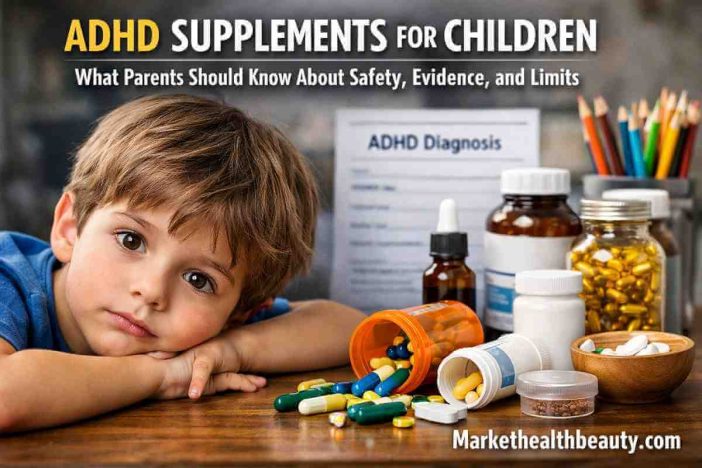
It usually begins quietly. A restless morning. A teacher’s note. A growing sense that your child is working harder than everyone else just to sit still. Parents don’t look for miracles—they look for stability. In that search, ADHD supplements for children often appear as a hopeful alternative: something natural, something gentler, something that feels less intimidating than prescription medication.
But hope must be balanced with evidence. In pediatric brain health, decisions made too quickly can shape outcomes for years. Before adding any supplement to a child’s routine, parents need clarity—not marketing promises, not exaggerated claims, but a careful look at what research actually supports, what remains uncertain, and what may carry hidden risk.
This article approaches ADHD supplements for children through a safety-first, evidence-aware lens—so decisions are informed, not emotional.
Why ADHD Supplements for Children Are Considered
Parents often explore supplements because:
- Concern about medication side effects
- Desire for “natural” support
- Mild symptom presentation
- Nutritional deficiencies identified through testing
According to the Centers for Disease Control and Prevention (CDC), ADHD affects millions of children in the United States. Standard care typically includes behavioral therapy and, when appropriate, medication. Supplements are not first-line treatment.
That distinction matters.
What Research Actually Shows (And What It Does Not)
Omega-3 Fatty Acids
Among ADHD supplements for children, omega-3 fatty acids have the strongest evidence base. Several meta-analyses suggest modest improvements in attention, particularly when EPA levels are higher.
However:
- Effect sizes are small
- Results vary
- Not comparable to stimulant medication outcomes
Omega-3 may serve as supportive nutrition—not replacement therapy.
Iron and Zinc (Only When Deficient)
Research indicates children with ADHD sometimes show lower ferritin or zinc levels.
Important:
- Supplementation only helps if deficiency exists
- Over-supplementation can cause harm
- Blood testing is required
This is medical territory—not over-the-counter experimentation.
Magnesium and Vitamin D
Evidence is mixed and often based on small studies. Some children with ADHD have lower vitamin D levels, but supplementation outcomes vary significantly.
These nutrients support general brain health—but are not ADHD-specific treatments.
Herbal Products (High Risk Area)
Adaptogens and herbal compounds lack strong pediatric evidence. Dosage standardization is inconsistent. Safety profiles are unclear in long-term child use.
This is where marketing often outruns science.
Parents should be cautious.
The Safety Framework Parents Must Follow
If considering ADHD supplements for children:
- Consult a pediatrician first
- Rule out nutritional deficiencies via lab testing
- Avoid products with proprietary blends
- Look for third-party testing
- Monitor behavioral changes carefully
- Never discontinue prescribed medication without supervision
Children metabolize substances differently from adults. What appears harmless online may not be appropriate developmentally.
Brain Development Is Long-Term
Childhood is a sensitive period for neural development. Decisions should prioritize stability and long-term function.
If you want a broader framework for understanding lifelong brain protection, explore our hub on Brain Health, Cognitive Longevity & Neuroprotection.
ADHD management today shapes cognitive independence tomorrow.
Supplements as Complement, Not Cure
It’s important to state clearly:
ADHD supplements for children do not cure ADHD.
ADHD is a neurodevelopmental condition. Some nutritional strategies may support overall brain function, but they do not replace structured therapy, educational support, or when necessary, medication.
For long-term health strategy thinking, see our article on Longevity Risk Management.
When Supplements May Be Reasonable
- Mild symptoms
- Confirmed deficiency
- Pediatric supervision
- Integrated behavioral therapy
- Clear monitoring plan
When used responsibly, certain nutrients can support overall neurological health—but they are one piece of a much larger system.
When to Avoid Supplement Use
- No medical consultation
- Online-only product claims
- Promise of cure
- Rapid behavior expectations
- High-dose experimentation
Aggressive intervention in a developing brain carries risk.
Final Perspective
Parents navigating ADHD decisions are not looking for shortcuts—they are looking for stability. ADHD supplements for children can be part of a thoughtful plan when approached cautiously, clinically, and with professional oversight.
But evidence remains limited.
Safety comes first.
Brain health is not built on trends—it is built on consistency, monitoring, and long-term strategy.