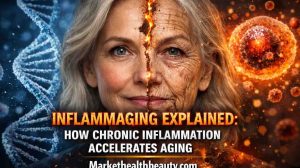

Cellular Aging Begins Long Before We Notice It
Cellular aging is not something that suddenly happens in later life. It begins quietly, often decades before outward signs of aging become visible.
At the cellular level, aging reflects a gradual imbalance between:
- Damage accumulation
- Repair capacity
- Adaptive resilience
When cells can no longer maintain internal stability, function slowly declines. This cellular drift eventually shapes tissue health, organ performance, and overall biological aging.
Understanding this process is essential to grasping the foundations of longevity science and healthy aging.
What Is Cellular Aging?
Cellular aging refers to the progressive loss of a cell’s ability to:
- Maintain structural integrity
- Repair molecular damage
- Respond effectively to stress
Cells are not static units. They constantly:
- Replicate DNA
- Produce energy
- Communicate with neighboring cells
- Adapt to environmental stressors
Over time, these processes become less efficient, setting the stage for biological aging.
Why Damage Accumulates Inside Cells
Every cell experiences damage simply by functioning.
Sources of cellular damage include:
- DNA replication errors
- Oxidative stress from metabolism
- Environmental exposures
- Inflammatory signaling
In youth, repair mechanisms usually keep pace. With age, repair efficiency declines, allowing small defects to persist and accumulate.
This gradual buildup is one of the core drivers of cellular aging.
DNA Damage and Repair Decline
DNA is constantly under stress. Cells rely on complex repair systems to correct errors and prevent instability.
As cellular aging progresses:
- DNA repair becomes slower
- Error correction becomes less precise
- Genetic stability weakens
This does not cause immediate failure—but it increases vulnerability over time.
Longevity research consistently shows that aging is shaped more by repair decline than by damage itself.
Mitochondrial Dysfunction and Energy Loss
Mitochondria produce the energy cells need to function.
With cellular aging:
- Energy production becomes less efficient
- Reactive byproducts increase
- Cellular signaling becomes disrupted
This creates a feedback loop: lower energy reduces repair capacity, accelerating aging-related decline.
Because energy metabolism affects nearly every biological system, mitochondrial dysfunction plays a central role in aging at the cellular level.
Protein Quality Control Breakdown
Cells rely on precise protein folding and recycling.
As cells age:
- Damaged proteins accumulate
- Recycling systems become overwhelmed
- Cellular communication degrades
This decline in protein quality control contributes to:
- Loss of cellular specialization
- Increased stress sensitivity
- Reduced tissue integrity
Cellular aging is therefore not just about DNA—it is about maintaining order within complex molecular systems.
Cellular Senescence: When Cells Stop Dividing
One of the most studied outcomes of cellular aging is cellular senescence.
Senescent cells:
- Stop dividing permanently
- Remain metabolically active
- Release inflammatory signals
Initially, senescence serves a protective role by preventing damaged cells from replicating. Over time, however, the accumulation of senescent cells contributes to tissue dysfunction and chronic inflammation.
This dual role makes senescence a key focus in modern aging research.
Why Senescent Cells Matter for Long-Term Health
As senescent cells accumulate:
- Tissue regeneration slows
- Inflammatory signaling increases
- Cellular communication weakens
This environment accelerates age-related decline at the system level.
The impact of senescent cells helps explain why healthspan often shortens even as lifespan increases, a concept explored further in Healthspan vs Lifespan.
Cellular Aging Is a Systems Problem
Cellular aging does not occur in isolation.
It interacts with:
- Metabolic regulation
- Immune function
- Vascular health
- Neurological signaling
This systems interaction explains why aging affects multiple organs simultaneously and why single-target solutions rarely succeed.
For a broader framework, cellular aging fits within the Anti-Aging, Longevity & Healthy Aging model, where prevention focuses on preserving system balance rather than eliminating single causes.
Expert Insight: What Cellular Aging Teaches Us About Prevention
From years of reviewing aging biology literature, one insight remains consistent:
Cellular aging rewards early consistency, not late intensity.
Most cellular damage is cumulative. Preventive strategies work best when they:
- Reduce long-term stress
- Support repair systems
- Avoid repeated cellular overload
This perspective shifts aging from something to fight into something to manage intelligently.
Practical Perspective: Why Cellular Aging Changes Health Decisions
Understanding cellular aging reframes health choices.
Rather than chasing quick results, it encourages:
- Long-term metabolic stability
- Sustainable recovery patterns
- Avoidance of chronic overload
Advances in monitoring and early detection—discussed further in Medical Innovation, Diagnostics & Preventive Health Technology—are increasingly used to observe how cellular processes change over time.
Common Misconceptions About Cellular Aging
“Cellular aging only matters in old age”
Cellular aging begins early and progresses gradually.
“Cellular damage always leads to disease”
Damage increases risk, not certainty.
“One intervention can reverse cellular aging”
Cellular aging reflects system-wide processes, not a single failure.
FAQ: People Also Ask
What causes cellular aging?
Cellular aging is driven by accumulated damage, declining repair capacity, and reduced cellular resilience over time.
Is cellular aging reversible?
Some processes may be modifiable, but cellular aging itself reflects long-term biological change.
How does cellular aging affect longevity?
Cellular aging shapes tissue function, influencing healthspan more than lifespan.
Does cellular aging always lead to disease?
No. It increases vulnerability, not inevitability.
Reference
- Cellular aging mechanisms align with research summarized by the National Institute on Aging
- Senescence and aging frameworks are discussed in publications referenced by the World Health Organization
Bottom Line
Cellular aging is not a sudden event—it is a slow, cumulative process unfolding inside cells long before symptoms appear.
By understanding how damage accumulates, repair declines, and senescence shapes tissues, longevity science shifts the focus from reacting to decline toward preserving resilience.
Cellular aging explains why healthy aging must start earlier—and why consistency matters more than intensity.