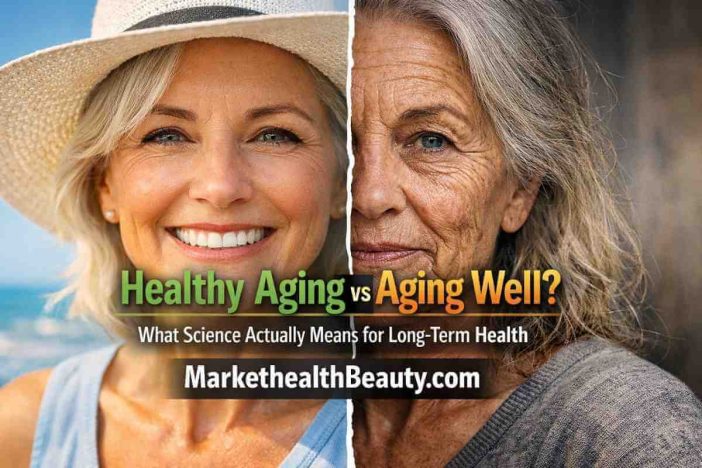
Healthy aging vs aging well may sound like a semantic debate, but in health science, language shapes priorities.
Aging well is often used casually. It suggests comfort, satisfaction, or personal fulfillment later in life. While meaningful, it is subjective and difficult to measure.
Healthy aging, on the other hand, is a scientific framework. It focuses on maintaining function, reducing long-term risk, and preserving independence as biological aging progresses.
This distinction explains why modern longevity research increasingly favors the term healthy aging—because it can be studied, measured, and improved over time.
How “Aging Well” Became a Lifestyle Concept
The idea of aging well grew out of social and cultural conversations rather than biomedical research.
It often includes:
- Emotional satisfaction
- Social engagement
- Personal purpose
- Comfort in later life
These factors matter deeply for quality of life. However, they do not explain why two people with similar lifestyles experience very different health trajectories.
From a scientific standpoint, aging well lacks precision. It describes outcomes—but not mechanisms.
Healthy Aging as a Scientific Framework
Healthy aging is defined by function over time, not feelings at a moment.
In research and public health, healthy aging typically refers to the ability to:
- Maintain physical mobility
- Preserve cognitive function
- Limit chronic disease burden
- Remain independent in daily life
This framework aligns closely with longevity science, which studies how aging unfolds biologically and systemically across decades.
For a broader conceptual foundation, this distinction is central to our Anti-Aging, Longevity & Healthy Aging framework.
Healthy Aging vs Aging Well Through a Scientific Lens
The contrast becomes clearer when viewed side by side.
Aging Well
- Subjective and personal
- Lifestyle-oriented
- Difficult to measure consistently
- Often retrospective (“Did I age well?”)
Healthy Aging
- Evidence-based and measurable
- Focused on prevention and resilience
- Assessed through functional indicators
- Forward-looking (“How can I age better?”)
Science gravitates toward healthy aging because it allows intervention before decline becomes irreversible.
Healthspan: Where the Concepts Intersect
The bridge between healthy aging and aging well is healthspan—the period of life spent in good functional health.
Healthy aging aims to extend healthspan.
Aging well is often how people experience that extended healthspan.
This relationship explains why longevity research prioritizes:
- Early risk awareness
- Long-term consistency
- Systemic balance
Rather than short-term comfort or cosmetic outcomes.
Why Prevention Defines Healthy Aging
Healthy aging emphasizes prevention not because disease is inevitable—but because risk accumulates silently.
Small metabolic changes, vascular stiffness, or low-grade inflammation may not affect daily comfort for years. Yet over time, they shape outcomes such as:
- Cardiovascular disease
- Cognitive decline
- Reduced mobility
This long view aligns closely with principles explored in Chronic Disease Prevention & Risk Reduction, where managing risk early often matters more than reacting late.
Healthy Aging Is Not About Avoiding Aging
A common misunderstanding is that healthy aging attempts to delay or escape aging itself.
It does not.
Healthy aging accepts aging as a biological reality and focuses instead on:
- Slowing functional decline
- Preserving adaptability
- Reducing avoidable damage
This pragmatic approach is why healthy aging fits naturally within longevity science—and why exaggerated “anti-aging” promises tend to fail under scrutiny.
Expert Insight: Why Language Shapes Health Outcomes
From years of evaluating health research and preventive frameworks, one pattern stands out:
People who frame aging as something to manage thoughtfully, rather than something to fear or deny, tend to make better long-term decisions.
Healthy aging encourages:
- Monitoring trends instead of chasing fixes
- Building resilience rather than reacting to symptoms
- Viewing health as a long-term system
Aging well often becomes the result of this mindset—not the strategy itself.
Practical Perspective: Choosing Healthy Aging Over Shortcuts
In real life, choosing healthy aging means:
- Valuing consistency over intensity
- Prioritizing function over appearance
- Thinking in decades, not weeks
It does not require extreme routines. It requires clarity about what actually compounds over time.
Advances in diagnostics and monitoring—discussed further in Medical Innovation, Diagnostics & Preventive Health Technology—are increasingly used to support this long-term view.
Common Misconceptions About Healthy Aging
“Healthy aging is only about physical health”
No. Cognitive resilience and independence are equally central.
“Aging well is enough”
Without healthy aging, aging well becomes fragile and short-lived.
“Healthy aging guarantees longevity”
Healthy aging reduces risk—it does not eliminate uncertainty.
FAQ: People Also Ask
Is healthy aging the same as longevity?
Healthy aging focuses on function and independence. Longevity includes lifespan but prioritizes healthspan.
Can someone age well without healthy aging?
Temporarily, yes. Long-term, function usually depends on healthy aging foundations.
When should healthy aging begin?
From a scientific standpoint, earlier awareness consistently leads to better outcomes.
Is healthy aging medically prescriptive?
No. It is a preventive and educational framework, not a treatment plan.
Why This Distinction Matters Long-Term
Confusing healthy aging with aging well often leads people to focus on outcomes they hope for rather than systems they can influence.
Healthy aging provides:
- A measurable framework
- A preventive mindset
- A realistic path to sustained independence
Aging well often follows.
Reference
- Public health perspectives align with research summarized by the World Health Organization
- Aging and function frameworks are consistent with work discussed by the National Institute on Aging
Bottom Line
Healthy aging vs aging well is not a debate about language—it is a difference in strategy.
Aging well describes how life feels.
Healthy aging shapes how life unfolds.
By prioritizing prevention, resilience, and function, healthy aging offers something more durable than comfort: capacity. And capacity, over time, defines how well we truly age.